
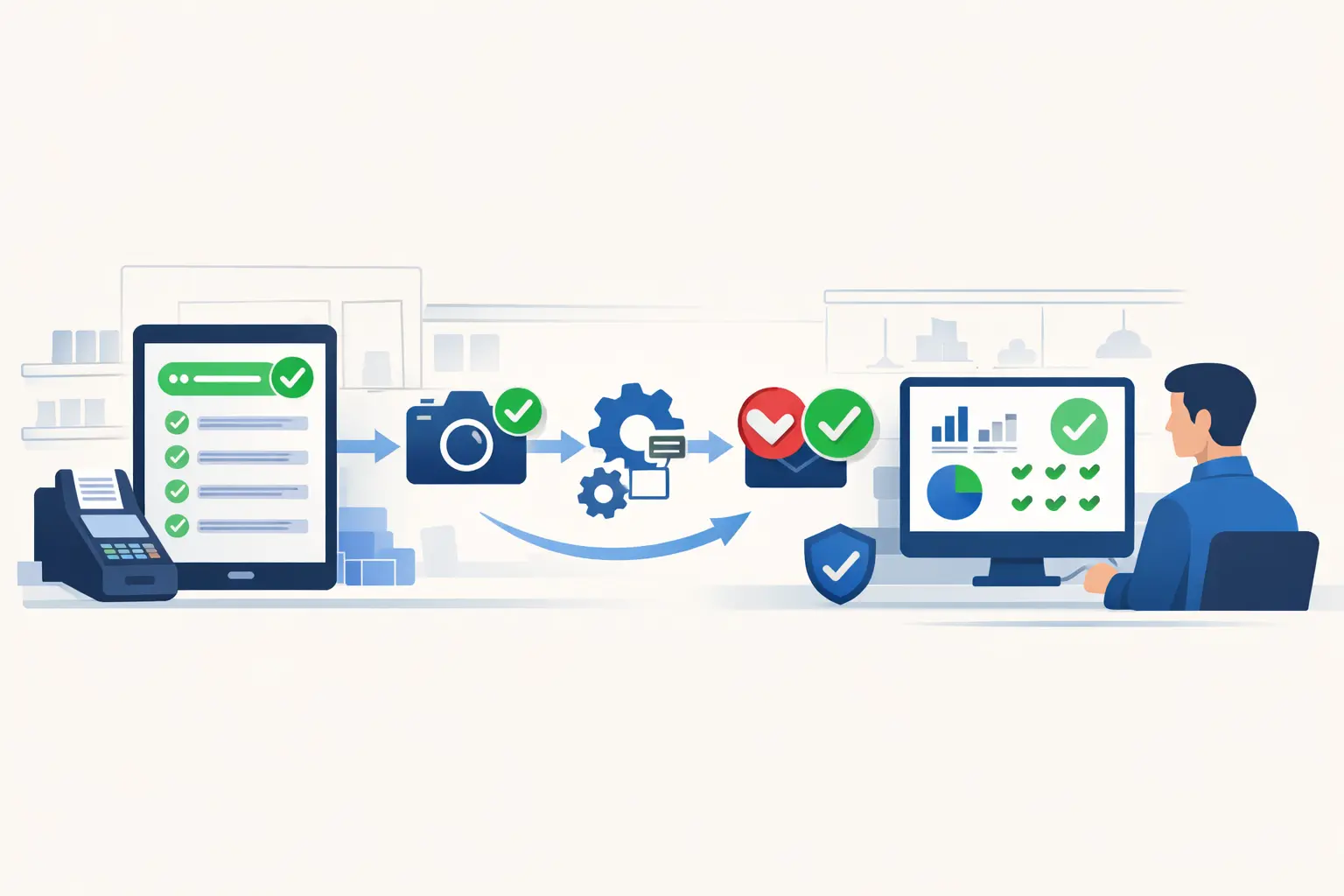
Retail Opening and Closing Checklists That Actually Get Completed (Without Manager Chasing)
Retail stores already have checklists. The real problem is that opening and closing routines are often designed like static documents, while store work happens under shifting traffic, staffing gaps, and last-minute interruptions. When the checklist ignores that reality, managers end up chasing completions instead of managing the floor.
This guide focuses on retail checklist design and execution timing so teams can complete what matters without constant reminders.
Why retail open/close checklists fail specifically
Retail checklists break for reasons that are different from field teams or warehouses:
- opening tasks compete with immediate customer-facing prep
- closing tasks are squeezed by end-of-day customer traffic
- security/cash steps are high-risk but mixed into low-risk tasks
- one deadline is applied to tasks that should happen in phases
A better checklist matches the pace of the shift.
Design opening and closing as separate operating systems
Opening checklists: readiness first
Opening should prioritize customer readiness and operational startup. Group tasks by outcome:
- storefront and front-of-house readiness
- register/cash setup
- merchandising and key displays
- safety/cleanliness checks
- team communication and priorities
Short, observable task wording matters. "Prepare floor" is too vague. "Recover front display and queue area" is reviewable.
Closing checklists: phased execution
Closing should be split into:
- pre-close prep (can begin before doors close)
- close-time tasks (time-sensitive)
- post-close verification (security/cash/lockup)
This structure reduces the usual pile-up in the final minutes of the shift.
Which retail steps should require proof
Proof is useful where managers often need verification later:
- damage documentation
- high-value display resets
- lockup/perimeter checks
- selected close-quality checks
Do not require proof for every routine step. If the evidence is never reviewed, it becomes friction instead of accountability.
Due-time sequencing by shift (the part teams usually skip)
Retail teams miss tasks less when due timing follows store flow:
- opening readiness due before customer-facing start
- sales floor standards checks due before peak windows
- pre-close prep due before close
- final security and lockup checks due after close
DoSurely?s recurring assignments and due rules are useful here because they let managers schedule work by phase instead of maintaining one oversized checklist.
Manager exception review pattern (instead of chasing)
Managers should review exceptions, not manually collect status updates all day.
A useful review list includes:
- overdue critical tasks
- failed or blocked items
- missing proof on proof-required steps
- repeat misses by task across days
This gives managers a coaching and quality-control workflow, not a reminder workflow.
Common retail checklist mistakes (and quick fixes)
Mistake: one long checklist for the entire day
Fix: split by opening/operational/closing blocks.
Mistake: every step needs proof
Fix: proof only for high-risk or frequently disputed tasks.
Mistake: task wording is vague
Fix: write tasks as observable actions with clear completion criteria.
Mistake: no review standard
Fix: define what is reviewed daily vs weekly and what gets escalated.
A practical 2-week store pilot
- digitize opening + closing only
- add proof to 3?5 key tasks
- set phased due windows
- review exceptions daily with shift leads
- adjust wording and proof rules after week one
Where DoSurely helps retail teams
DoSurely helps retail managers move from reminder-heavy checklisting to execution management through recurring assignments, due timing, selective proof, and exception-focused review.
Related reading
- Shift Handoffs Without the Chaos: A Practical Handoff Workflow for Busy Teams
- How Multi-Location Restaurants Keep Standards Consistent Across Every Store
- Back to the DoSurely Blog
Book a demo for retail opening/closing workflows
If your managers are spending too much time chasing checklist completion, book a demo and we can help you set up a retail-ready checklist and review workflow that matches real shift timing.